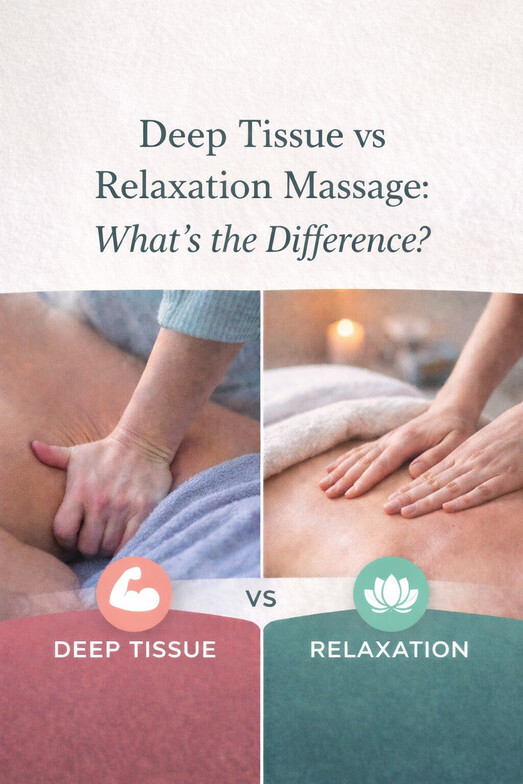
Although Relaxation and Deep Tissue Massage sit on opposite ends of the massage spectrum, they’re often confused.
When someone books the wrong type of treatment, it can lead to discomfort — or leave you walking out wondering, “What did I just spend my time and money on?”
Understanding the difference helps you choose the right treatment for your goals.
What Is a Relaxation Massage?
The purpose of a relaxation massage is to calm the nervous system — specifically the parasympathetic nervous system, which controls rest and recovery.
This style of massage uses lighter to moderate pressure and long, flowing techniques such as:
• Effleurage (gliding strokes)
• Petrissage (gentle kneading)
• Skin rolling
• Light compression
• Rhythmic movements designed to soothe the body
Relaxation massage is ideal for those experiencing stress, anxiety, mental fatigue, or simply needing time to unwind. It encourages circulation, reduces tension, and promotes an overall sense of calm.
A well-executed relaxation massage can leave you feeling deeply rested — some clients even say it feels like they’ve had a full night’s sleep.
What Is a Deep Tissue Massage?
Deep tissue massage is designed to address chronic tension, muscular adhesions, and areas of long-term discomfort. It can also support recovery from certain acute injuries once inflammation has settled.
This treatment works deeper into the muscle layers and connective tissue. Your RMT may use:
• Slow, focused pressure
• Elbows or forearms
• Trigger point techniques
• Cross-fiber friction
• Targeted muscle release
The goal is not simply pressure — it’s precision. By working into restricted tissue, we help improve mobility, increase blood flow, and encourage the body’s natural healing response.
It’s normal to feel some tenderness the following day after a deep tissue session. This happens as circulation increases and the body begins sending oxygen and nutrients to the treated area.
Common Misconceptions About Deep Tissue Massage
There are a few myths surrounding deep tissue work:
Myth #1: It has to hurt to work.
Effective deep tissue massage should feel therapeutic — not unbearable. Communication is key.
Myth #2: Deeper is always better.
More pressure does not automatically mean better results. The right pressure depends on your body and your goals.
Myth #3: It’s the only way to fix pain.
Sometimes chronic pain responds better to a balanced approach that includes both therapeutic and relaxation techniques.
How to Choose the Right Treatment
When booking your massage, consider what you’re hoping to gain from your session.
If you’re feeling overwhelmed, mentally drained, or simply want to “shut your brain off,” relaxation massage may be exactly what you need.
If you’re dealing with chronic tightness, limited range of motion, or ongoing muscular discomfort, deep tissue might be more appropriate.
It’s also important to remember that massage doesn’t have to be one or the other. Many sessions blend techniques — incorporating relaxation elements while still addressing deeper muscular concerns. This balanced approach can reduce stress while supporting long-term physical improvement.
Communication Is Everything
Always have open, honest communication with your RMT.
Our job is to help you reach your goals — whether that’s self-care, relaxation, acute pain relief, chronic pain management, fatigue recovery, or improved mobility.
If the pressure feels too much, say so.
If it’s not enough, speak up.
When you tell us what you need, we can tailor the session to support you properly.