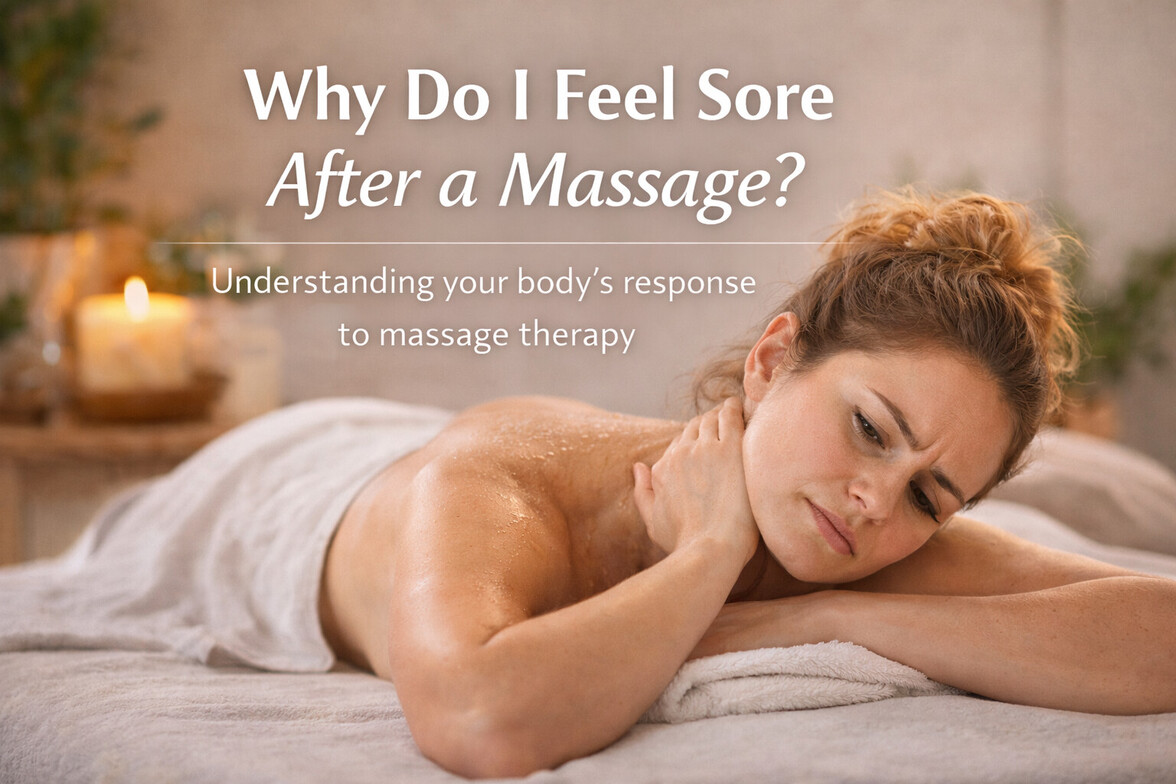
You leave a massage feeling relaxed, lighter, and maybe even a little taller.
Then the next day you wake up and notice your muscles feel sore.
For some people this can feel confusing. Massage therapy is supposed to help the body feel better, so why does soreness sometimes happen afterward?
The answer usually comes down to how the body adjusts to the work that was done during the treatment.
Your Body Is Adjusting
During a massage, especially if deeper work is involved, the muscles are manipulated, stretched, and encouraged to release tension they may have been holding for weeks, months, or even years.
When that tension begins to release, the body has to adjust to a new normal. Your muscles, connective tissue, and nervous system all begin responding to the changes, and that adjustment period can sometimes lead to temporary soreness.
In simple terms, the muscles and the brain are adjusting to the body being loosened, corrected, and brought back toward alignment.
Many people describe this feeling as being similar to post-workout soreness, especially if deeper pressure or focused therapeutic work was done during the treatment.
How Long Does the Soreness Last?
The level of soreness can vary depending on the type of massage and how your body responds to treatment.
For example:
-
Deep tissue massage may result in discomfort that lasts up to 2–3 days, especially if we worked deeply through tight muscle tissue.
-
Relaxation massage may still lead to mild soreness, particularly if areas of tension were discovered and worked on during the treatment.
Every body is different, and people can react differently to the same massage. What feels incredible for one person may leave another feeling slightly tender the next day.
What Can Help Reduce Post-Massage Soreness?
There are a few simple things that can help your body recover more comfortably after a massage.
Hydration is one of the most important.
Drinking extra water after your treatment helps support circulation and allows the body to recover more easily.
Other things that may help include:
-
Epsom salt baths, which many clients find soothing for tired muscles
-
Light stretching to keep the body moving
-
Gentle movement, such as going for a walk
The key is not to overdo it. Your body is adjusting, and giving it a little time to settle can make a big difference.
When Soreness Might Mean Something Else
Most post-massage soreness is simply the body responding to the work that was done. However, in some cases soreness can also mean that an area was worked more deeply than your body was ready for at that time.
This is why communication is so important.
Everyone’s body responds differently to massage therapy, and what works perfectly for one person may not feel the same for someone else. If something feels uncomfortable after your treatment, letting your massage therapist know helps us adjust pressure, techniques, and treatment plans for future sessions.
Massage therapy is always meant to be a collaborative process between therapist and client.
When Should You Contact Your Therapist?
Mild soreness is normal after many massage treatments, but you should consider reaching out to your massage therapist if you experience:
-
Pain that feels sharp or unusual
-
Discomfort that lasts longer than several days
-
Symptoms that feel concerning or unexpected
Your therapist is always there to help answer questions and ensure your treatment plan is working well for your body.
Communication Is Key
One of the most important parts of massage therapy is communication, both during and after your appointment.
Letting your therapist know how the pressure feels during the session and how your body responds afterward allows treatments to be adjusted to better suit your needs.
Massage therapy is not a one-size-fits-all approach. Each person’s body reacts differently, and ongoing communication helps ensure every session supports your body in the best possible way.